

Quick price summary: Community Nursing Melbourne in Brisbane (2026)
- Low end: $50 – $80 per hour (enrolled nurses, government-subsidised visits)
- Mid-range: $100 – $140 per hour (registered nurses, standard home visits)
- High end / enterprise: $160 – $200+ per hour (specialised RN care, after-hours, 24/7 nursing support)
Prices in AUD. Last updated 2026.
Community nursing services delivered in Brisbane cover a wide spectrum of clinical care, from routine wound dressings and medication management through to complex chronic disease management, post-hospital transition support, and continuous 24/7 nursing for high-needs patients. These services are carried out by either registered nurses (RNs) or enrolled nurses (ENs), and the distinction matters significantly to the total cost you will pay. RNs complete a university-level degree and can practise independently across a full clinical scope, while ENs complete a vocational qualification and perform nursing tasks under RN supervision.
Costs vary because no two care situations are the same. The clinical complexity of a patient’s needs, the time of day a visit occurs, travel time for the nurse, the funding program covering the care, and whether the service is delivered through a private provider or a public hospital health service all push prices in different directions. Brisbane-based families sourcing nursing care for aged, NDIS-eligible, or privately funded patients will encounter a broad range of fee structures, and understanding each component helps avoid overpaying or selecting an under-resourced provider.
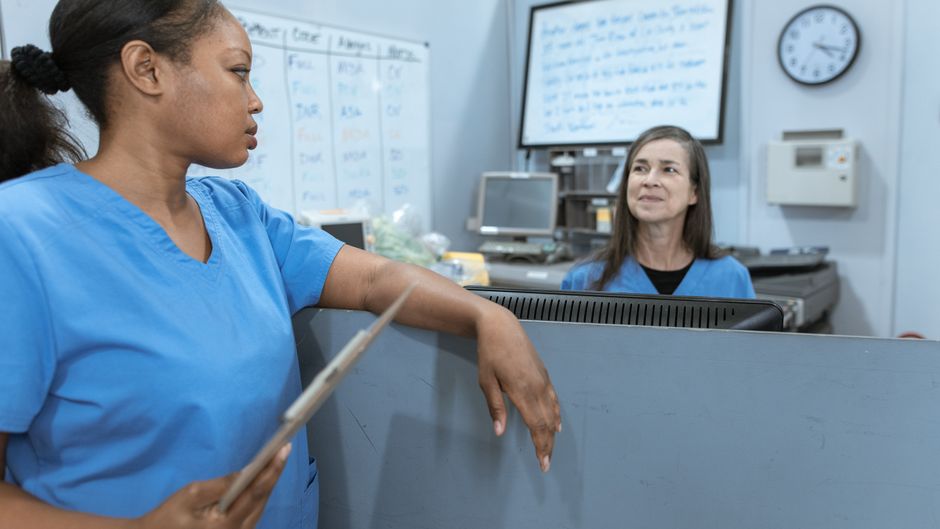
What Do Community Nursing Melbourne Cost in Brisbane?
Brisbane residents accessing community nursing services from Melbourne-based providers, or locally operating agencies that use Melbourne-aligned pricing, typically pay between $50 and $200 per hour depending on the care level and nurse classification. Enrolled nurses (ENs) at the lower end of the scale charge approximately $50 to $80 per hour for supervised, lower-complexity tasks such as personal hygiene assistance, basic wound care, and medication prompting. Registered nurses carrying out clinical assessments, IV management, catheter care, or chronic disease management generally bill at $100 to $140 per hour during standard business hours.
After-hours, weekend, and public holiday rates add a loading of between 25% and 50% on top of the base hourly rate, pushing specialised RN visits to $160 to $200 or beyond. Live-in or 24/7 nursing arrangements are quoted on a daily or weekly basis rather than hourly, with daily rates sitting around $600 to $700 for enrolled nurse coverage and $900 to $1,200 for continuous RN support. Government funding through programs such as the Support at Home program (which replaced Home Care Packages from July 2025), the Commonwealth Home Support Programme (CHSP), and NDIS can reduce or fully cover these costs for eligible participants, meaning the out-of-pocket figure varies enormously from one household to the next.
Price Breakdown by Service Level
| Service Level | What You Get | Typical Price Range | Best For |
|---|---|---|---|
| Basic | Enrolled nurse visits for medication prompting, personal care, basic wound dressings, and support worker-adjacent tasks under RN oversight | $50 – $80 per hour | Low-complexity aged care or NDIS participants with government funding contribution |
| Standard | Registered nurse home visits for wound management, catheter care, clinical assessments, chronic disease management, and health monitoring | $100 – $140 per hour | Post-hospital transition patients, people with chronic conditions requiring weekly or daily visits |
| Premium | RN-led care with specialist knowledge (palliative, oncology, diabetes), after-hours availability, detailed care planning, and family support coordination | $150 – $179 per hour | Complex clinical needs, families requiring flexible scheduling including evenings and weekends |
| Enterprise / 24/7 | Continuous live-in or shift-based nursing care, full clinical care delivered in the home, coordination across hospital health services and community providers | $600 – $1,200+ per day | High-dependency patients, short-term post-surgical recovery, or families unable to access residential aged care |

What Affects the Cost of Community Nursing Melbourne in Brisbane?
Type of nurse and clinical scope
The single biggest driver of cost is whether the service is delivered by an RN or an EN. RNs can assess, diagnose, plan, and independently deliver the full range of nursing care including complex wound management, IV therapy, and chronic disease management programs. ENs work within a more limited scope and require RN supervision. Private nursing agencies typically charge a 15% to 30% premium for RN-led visits over equivalent EN visits, and that gap widens further for RNs with postgraduate specialist qualifications.
Time of day, day of week, and urgency
Standard business hours (Monday to Friday, 8am to 6pm) attract the base hourly rate. Evening visits, early morning starts, Saturday appointments, Sunday care, and public holiday visits all attract penalty rate loadings that reflect Australian industry award conditions. Urgent or unplanned visits can carry a call-out fee of $80 to $120 on top of the hourly rate, regardless of the nurse classification.
Clinical complexity and duration of each visit
A simple daily wound redressing may take 20 to 30 minutes and be invoiced as a half-hour minimum. A complex assessment involving medication reconciliation, care plan updates, chronic disease monitoring, and family consultation can run 90 minutes or longer. Providers generally bill in 15 or 30-minute increments after the minimum, so visit duration has a direct and linear impact on the total weekly or monthly nursing budget.
Travel time and location
Brisbane’s suburban spread means travel time is a genuine cost factor. Providers based in Melbourne delivering telehealth coordination or dispatching nurses to Brisbane may charge travel loading or kilometre-based fees. Inner Brisbane suburbs typically attract no additional travel cost with local agencies, but outer regional and semi-rural areas around the greater Brisbane region can add $15 to $40 per visit in travel fees. Nurses working across the Torres Strait and Aboriginal and Torres Strait Islander community health programs in regional Queensland often operate under separately negotiated funding arrangements that change the fee structure entirely.
Funding program and government subsidy eligibility
Whether a patient is fully private-pay or eligible for government-funded programs changes the out-of-pocket cost dramatically. NDIS participants with nursing support included in their plan typically pay nothing directly, with costs invoiced against their plan budget at the NDIS price guide rate. Support at Home participants (eligible aged Australians) receive subsidised care with an income-tested co-contribution. CHSP-funded nursing attracts a very low client contribution, sometimes under $15 per visit. Privately funded patients with no government eligibility pay the full provider rate, which is where the $100 to $200 per hour figures apply most directly.
How to Get Accurate Quotes
- Clarify the type of nurse required before approaching any provider. Confirm whether the care tasks legally require an RN or whether an EN working under RN oversight is appropriate. This single decision can change costs by 20% to 30%.
- Establish government funding eligibility first. Contact My Aged Care (for aged care programs), the NDIS (for eligible participants under 65 with a disability), or the relevant Queensland hospital health service to determine whether subsidised nursing is available before comparing private rates.
- Request itemised quotes that break out the base hourly rate, travel fees, administration fees, after-hours loadings, and any care coordination charges separately. A headline rate of $100 per hour can become $140 per visit once travel and admin are added.
- Ask specifically about minimum visit duration policies. Some providers charge a 60-minute minimum regardless of actual visit length. For short daily tasks, this adds up to a significant weekly cost difference compared with providers billing in 30-minute increments.
- Compare at least three providers and request references from current clients with similar care needs. Ask each provider whether the nursing staff are directly employed or contracted, as this affects continuity of care and accountability when clinical standards are at issue.
Red Flags to Watch Out For
- Quotes with no nurse classification detail. Any legitimate community nursing provider should immediately clarify whether care will be delivered by an RN or EN and explain the clinical rationale for that choice.
- No written care plan provided before services begin. A clinical care plan is an essential professional requirement, not an optional extra. Providers who begin visits without one are operating outside accepted nursing practice standards.
- Invoices that bundle all charges into a single line item. Legitimate providers can break out nursing hours, travel, administration, and care coordination separately. Bundled invoices make it impossible to audit what you are paying for.
- Rates significantly below $50 per hour for RN services. This is below any sustainable award-compliant rate for a registered nurse in Australia in 2026. Providers quoting under this threshold may be using unqualified support workers rather than nurses, or misrepresenting worker qualifications.
- No clear after-hours contact process. Community nursing patients often have time-sensitive clinical needs outside business hours. A provider with no documented escalation pathway or after-hours nurse contact is a clinical risk.
- Pressure to commit to long-term service agreements before a trial period. Reputable providers allow a short assessment period before locking in ongoing care arrangements. High-pressure sales tactics in a clinical care context are a meaningful warning sign.

Frequently Asked Questions
How much do community nursing melbourne cost in Brisbane on average?
The average cost for community nursing in Brisbane in 2026 sits at roughly $100 to $120 per hour for a registered nurse during standard business hours. Enrolled nurse services average $60 to $75 per hour. Patients accessing government-funded programs through NDIS or the Support at Home program may pay significantly less, with some eligible participants contributing as little as $0 to $20 per visit depending on their income assessment and plan budget.
Why are some community nursing melbourne prices so much cheaper?
Lower prices often reflect EN rather than RN staffing, shorter minimum billing increments, or government subsidy arrangements that reduce the client’s share of the total cost. Occasionally, lower rates indicate that a provider is using workers without the appropriate nursing qualifications, particularly for tasks that require clinical registration. It is worth confirming with any low-cost provider whether care staff hold current AHPRA registration as a nurse and what their specific qualification level is before agreeing to a service.
Is it worth paying more for community nursing melbourne in Brisbane?
For straightforward, low-complexity care needs such as medication prompting or personal hygiene assistance, an enrolled nurse at a lower rate is often entirely appropriate. For clinical tasks including wound management, chronic disease management, post-surgical care, or any situation where independent clinical judgement is required, paying for a qualified RN is worth the additional cost. Clinical errors in community nursing can result in hospital readmission, infection, or serious patient harm, and the cost difference between EN and RN rates is small relative to the risk of inadequate clinical oversight.
Choosing a community nursing provider in Brisbane comes down to matching the right nurse classification to the actual clinical need, understanding which government funding programs apply to the patient’s situation, and getting itemised quotes that make the full cost structure transparent. Families who invest time in these three steps before signing any service agreement consistently avoid the most common and costly mistakes in arranging home-based nursing care.