Quick price summary: Croissant in Brisbane (2026)
- Low end: $3.50 – $5.00 AUD
- Mid-range: $5.00 – $8.00 AUD
- High end / enterprise: $8.00 – $14.00 AUD
Prices in AUD. Last updated 2026.
Brisbane’s croissant scene has matured considerably over the past few years, with dedicated pastry bakeries now sitting alongside cafes and supermarkets to give buyers a wide range of options. Prices vary from budget-friendly grab-and-go options to hand-laminated, butter-rich pastries baked fresh daily by classically trained pastry chefs. What you pay depends heavily on where you buy, what goes into the croissant, and how much craft is involved in making it.
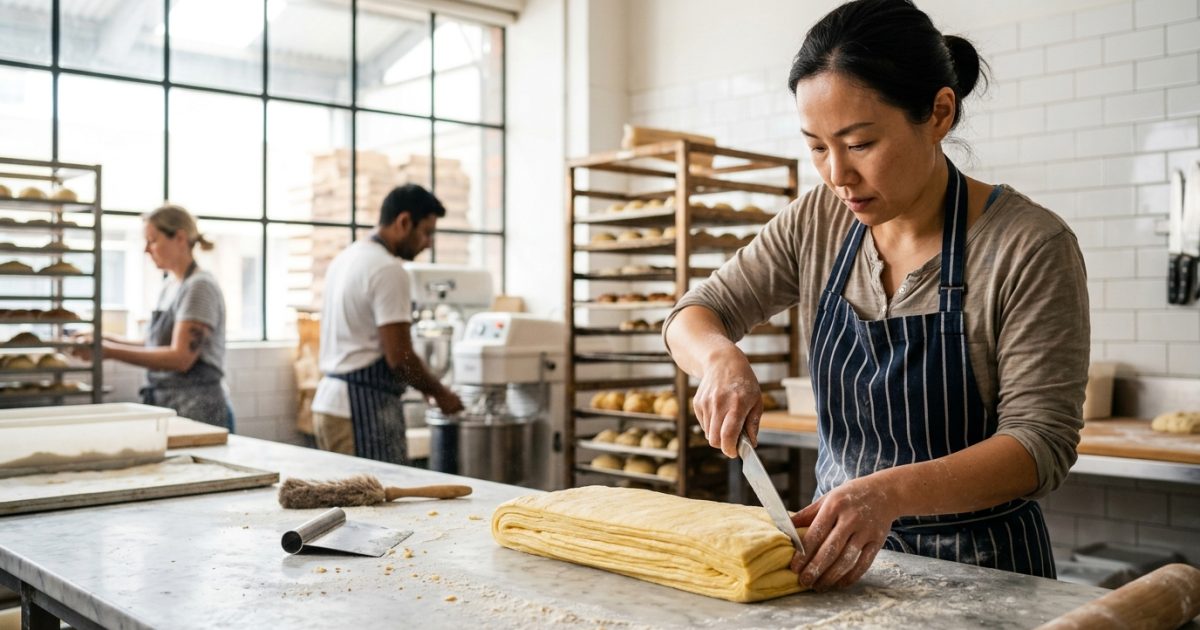
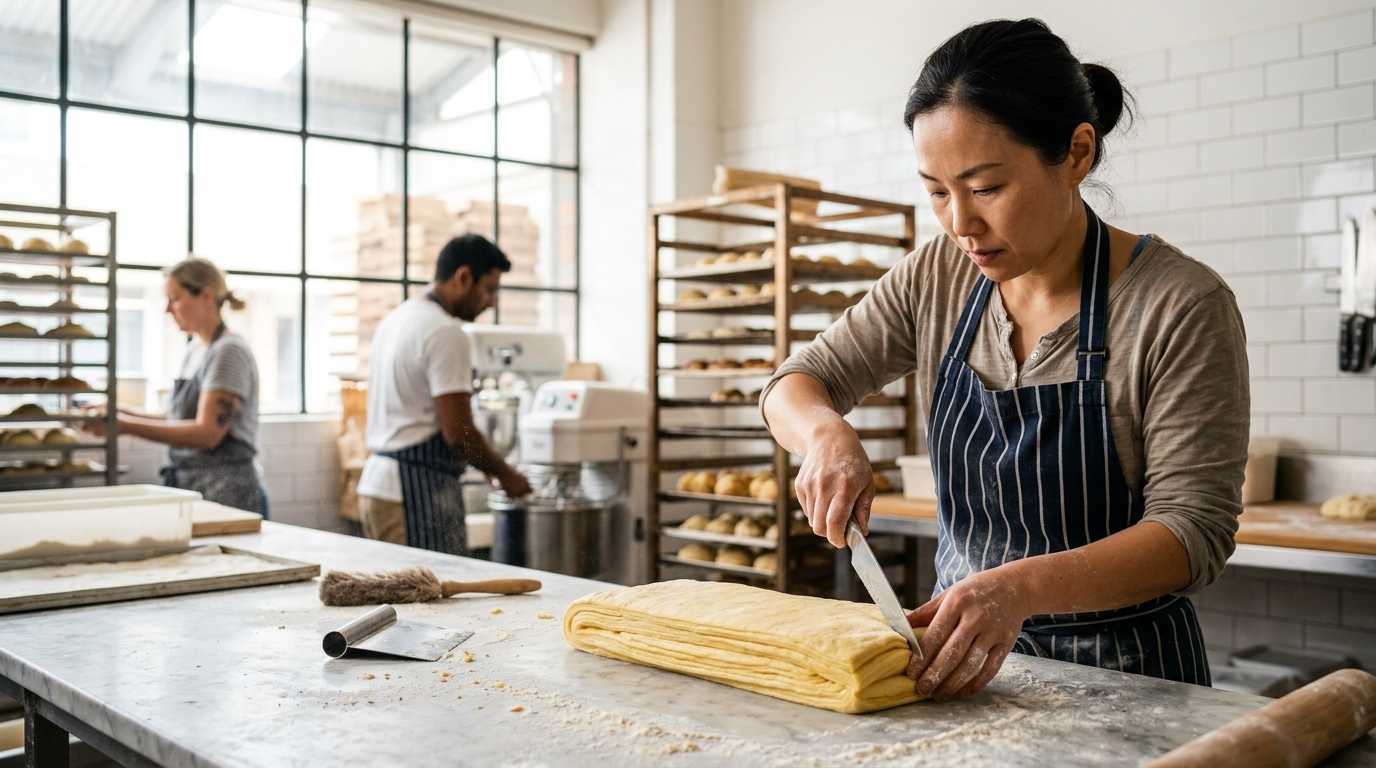
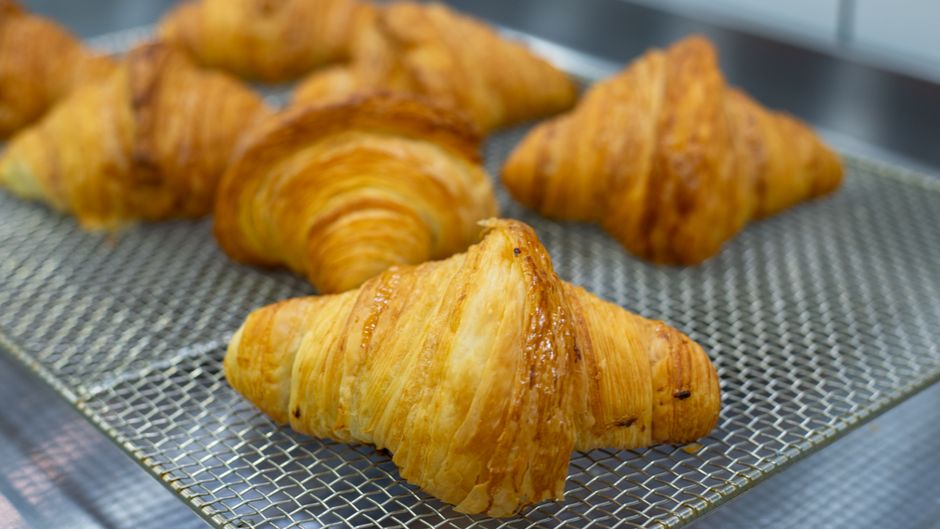
A plain butter croissant from a supermarket in-store bakery and one from a specialist patisserie are very different products, even if they look similar on the shelf. The former is typically prepared using pre-made frozen dough, while the latter involves multiple days of laminating real butter into fresh dough, folding and resting repeatedly to build those distinctive flaky layers. That difference in process, ingredients, and skill is what drives the price gap.
What Do Croissant Cost in Brisbane?
At the low end, croissants from supermarket bakeries, service stations, and chain cafes generally fall between $3.50 and $5.00 AUD. These are typically prepared from par-baked or frozen dough and are baked fresh each morning on-site, but they use standard fats and flour rather than premium European-style butter. They are a perfectly reasonable option for everyday eating.
Specialty bakeries and patisseries in Brisbane charge between $5.50 and $9.00 AUD for a plain butter croissant, with filled varieties such as a traditional chocolate croissant (pain au chocolat) or almond croissant sitting closer to $7.00 – $10.00 AUD. At the premium end, artisan operators who use imported French butter, slow fermentation, and small-batch baking can charge $10.00 – $14.00 AUD per croissant, particularly for seasonal or filled specialty versions. Catering and wholesale orders for events or offices are priced differently, usually on a per-dozen basis ranging from $48.00 to $96.00 AUD depending on quality tier.
Price Breakdown by Service Level
| Service Level | What You Get | Typical Price Range | Best For |
|---|---|---|---|
| Budget / Supermarket | Par-baked or frozen dough, baked fresh in-store, standard butter or margarine blend | $3.50 – $5.00 AUD | Everyday breakfasts, high volume, price-conscious buyers |
| Cafe / Bakery Standard | House-made or quality supplier dough, real butter, plain or chocolate croissant, baked fresh daily | $5.00 – $7.50 AUD | Weekend treat, work morning teas, reliable quality |
| Artisan / Patisserie | Laminated in-house, premium butter (often French or cultured), slow-fermented dough, small batch | $7.50 – $10.00 AUD | Discerning pastry lovers, gifts, special occasions |
| Premium / Specialty | Signature or seasonal filled croissants, competition-level technique, limited daily quantities | $10.00 – $14.00 AUD | Enthusiasts, food gifts, trying Brisbane’s best pastries |
What Affects the Cost of Croissant in Brisbane?
Butter quality and type
Butter is the defining ingredient in a croissant. Standard Australian butter works, but many top Brisbane bakeries use European-style cultured butter with a higher fat content, which creates more distinct, flaky layers and a richer flavour. Imported French butter can cost two to three times as much as standard product, and that cost flows through to the retail price.
Method of preparation
Croissants prepared using traditional hand-lamination involve three or more days of work: mixing, resting, folding butter into dough, and repeated chilling periods. Croissants prepared from pre-sheeted or frozen dough take a fraction of that time. The labour intensity of hand-laminated pastries is a primary reason artisan prices are higher.
Fillings and inclusions
A plain butter croissant is the baseline. A traditional chocolate croissant uses two bars of quality dark chocolate tucked into fresh dough before baking, adding both material and labour cost. Almond croissants use day-old croissants soaked in syrup and filled with frangipane, making them a higher-value product despite using bread that would otherwise be discarded. Specialty fillings such as seasonal fruit custard or premium ham and cheese push prices higher again.
Location and overheads
Bakeries in inner Brisbane suburbs such as Milton, Newstead, and Kangaroo Point carry higher rent than those in outer areas like Wynnum or Lota. Those overheads are reflected in pricing. A croissant from a Kangaroo Point patisserie will typically cost more than an equivalent product from a suburban bakery, even if the quality is comparable.
Batch size and exclusivity
Some of Brisbane’s best-regarded pastry operations deliberately limit their daily output. When a bakery produces only 80 croissants per day rather than 400, fixed costs are spread across fewer units, and the price per unit rises accordingly. Limited quantities also signal handcrafted production rather than scaled-up manufacturing.
How to Get Accurate Quotes
- Decide on the quantity you need. A single croissant for personal consumption and a catering order of 60 for a corporate breakfast are priced on very different scales. Know your amount before making contact.
- Specify the type. Tell the bakery whether you want plain butter croissants, chocolate croissants, almond, or filled specialty varieties. Prices differ across each category.
- Ask whether the product is baked fresh on the day or prepared in advance and held. For events, confirm the bake time and delivery or pickup window.
- Request a per-unit price and a per-dozen price. Many bakeries offer a modest discount on bulk or catering orders, but you need to ask directly.
- Check what is included in the price for catering orders, such as packaging, labelling, or delivery to your Brisbane location, as these can add $20.00 – $60.00 AUD to the total.
Red Flags to Watch Out For
- No visible lamination or layers when the croissant is torn open. Properly made croissants have a honeycomb interior with distinct, airy layers. A dense, bready interior suggests shortcuts in the dough process.
- Greasy or oily texture rather than a clean, flaky finish. This often indicates margarine or low-quality fat blends rather than real butter.
- Croissants displayed uncovered at room temperature for extended periods. Pastries baked fresh should be sold within a few hours for best quality, and proper storage matters.
- No information on ingredients or preparation method when you ask. Reputable bakeries are transparent about whether they laminate in-house or use supplied dough.
- Catering quotes with no written breakdown. Any order above $100 AUD should include a clear itemised quote specifying quantity, variety, price per unit, and any delivery fees.
- Very low prices that seem inconsistent with the claimed quality. A bakery advertising hand-laminated, butter croissants at $2.50 each is unlikely to be delivering what is described.

Frequently Asked Questions
How much do croissant cost in Brisbane on average?
The average price for a croissant bought from a Brisbane cafe or bakery in 2026 sits around $5.50 – $7.00 AUD for a plain butter version. Filled options such as a chocolate croissant or almond croissant typically cost $7.00 – $9.50 AUD. Supermarket options come in lower at $3.50 – $4.50 AUD, while premium artisan pastries from specialty operators can reach $12.00 – $14.00 AUD.
Why are some croissant prices so much cheaper?
Lower-priced croissants are almost always prepared using pre-made frozen or par-baked dough sourced from a commercial supplier. The dough arrives ready to bake, which cuts preparation time dramatically and removes the need for skilled pastry staff. The butter content is also typically lower or substituted with a blend. These croissants are baked fresh each day, but the groundwork has been done off-site, which is why the retail price can be kept at $3.50 – $5.00 AUD.
Is it worth paying more for croissant in Brisbane?
If you are eating a croissant as a quick breakfast option, a supermarket or standard cafe version at $4.00 – $5.50 AUD is a reasonable choice. If you are buying for a special occasion, hosting guests, or you simply care about the quality of your pastries, spending $7.50 – $12.00 AUD at a dedicated patisserie is worth the difference. Brisbane now has several operators producing croissants that genuinely compete with what you would find in Paris, and the quality gap between a well-made artisan croissant and a frozen-dough product is significant.
Brisbane’s croissant market in 2026 gives buyers strong options at every price point, from affordable daily staples through to carefully crafted pastries from trained patissiers. Knowing what drives the price difference means you can match your spend to what actually matters for your situation, whether that is feeding a crowd on a budget or sourcing the best butter croissant the city has to offer.