Quick price summary: Tilers in Brisbane (2026)
- Low end: $45 – $60 per sqm (basic ceramic or vinyl, straightforward layouts)
- Mid-range: $75 – $110 per sqm (porcelain, stone-look tiles, standard prep work)
- High end / enterprise: $120 – $180+ per sqm (natural stone, complex patterns, full waterproofing, large-scale projects)
Prices in AUD. Last updated 2026.
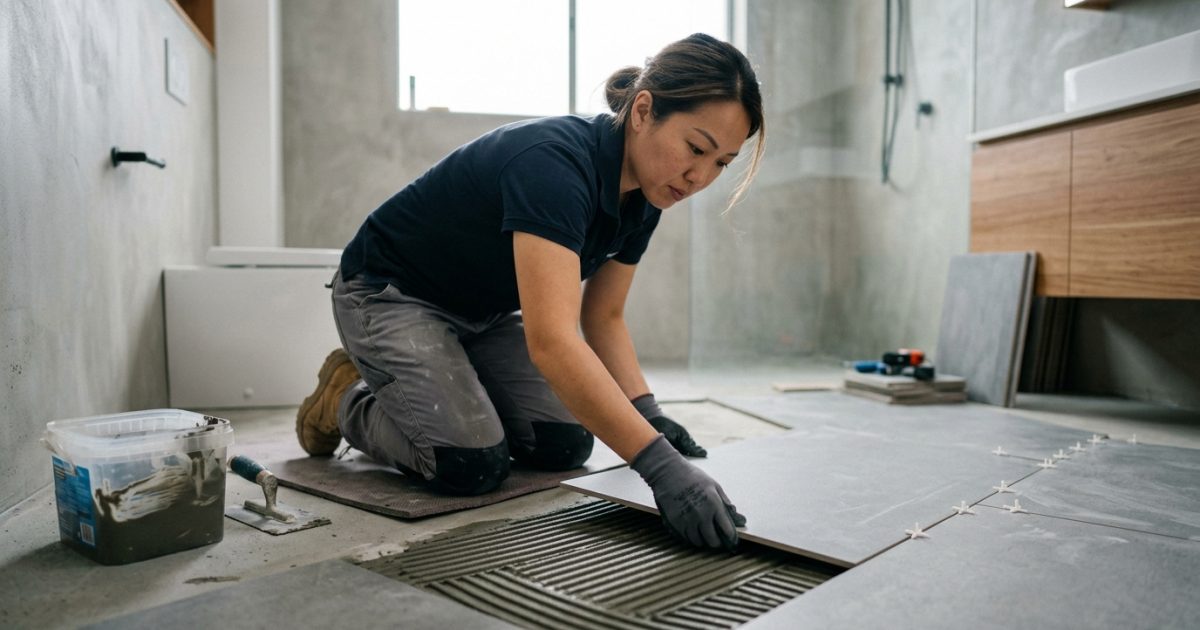
Tiling work in Brisbane covers a wide range of jobs, from laying ceramic floor tiles in a laundry to fully waterproofing and tiling a bathroom or outdoor entertaining area. The work involves surface preparation, cutting and laying tiles to a specified pattern, applying grout, and in wet areas, applying waterproofing membranes before any tile goes down. Labour and materials are typically quoted separately, though many tilers will bundle both into a per-square-metre rate for smaller residential jobs.
Costs vary significantly because no two tiling jobs share the same conditions. The size of the space, the type of tile chosen, the condition of the substrate, and whether waterproofing is required all push the final cost up or down. A straightforward floor tiling job in a dry area costs far less per sqm than a bathroom renovation requiring full prep, waterproofing, floor tiles, wall tiles, and precise cuts around fixtures. Understanding what drives those differences helps you budget accurately and spot quotes that are either too good to be true or unnecessarily inflated.

What Do Tilers Cost in Brisbane?
In Brisbane, most residential tiling jobs fall between $45 and $150 per square metre for labour, depending on the complexity of the work and the tile type being installed. Basic ceramic floor tiles in a straightforward layout sit at the lower end, around $45 to $60 per sqm for labour alone. Mid-range jobs using porcelain or stone-look tiles with some prep work typically run $75 to $110 per sqm. Premium projects involving natural stone, herringbone or feature patterns, or large-format tiles (which require more careful levelling and cutting) regularly exceed $120 per sqm, with some specialist jobs reaching $180 per sqm or more.
Hourly rates for Brisbane tilers generally range from $65 to $120 per hour, though most experienced tilers prefer to quote per sqm because it gives both parties a clearer picture of the final cost. For smaller repair jobs, grout replacement, or single-tile fixes, expect a minimum call-out charge of $100 to $180, plus materials. Tile removal, where old tiles need to be chipped off before new ones go down, adds $20 to $45 per sqm on top of the laying rate. Waterproofing in wet areas adds a further $15 to $30 per sqm and is not optional under the National Construction Code for showers, wet rooms, and balconies.
Price Breakdown by Service Level
| Service Level | What You Get | Typical Price Range | Best For |
|---|---|---|---|
| Basic | Ceramic or budget porcelain tiles, simple grid layout, minimal prep, dry areas only | $45 – $65 per sqm (labour) | Laundries, patios, garage floors, low-traffic areas |
| Standard | Porcelain or stone-look tiles, standard floor and wall tiling, basic surface prep, grouting included | $70 – $110 per sqm (labour) | Kitchens, living areas, hallways, medium-difficulty projects |
| Premium | Large-format porcelain or natural stone, feature patterns, full waterproofing in wet areas, detailed cuts around fixtures | $115 – $160 per sqm (labour) | Bathrooms, ensuites, outdoor entertaining, high-end renovations |
| Enterprise / Custom | Full project management, tile supply and delivery, complex layouts (herringbone, mosaic, mixed materials), commercial-grade waterproofing, large-scale tiled spaces | $160 – $180+ per sqm (all-in) | Commercial fit-outs, high-end residential builds, pools, feature walls |
What Affects the Cost of Tilers in Brisbane?
Tile type and material
Ceramic tiles are the most affordable to lay because they are lighter and easier to cut. Porcelain is denser and harder, requiring more time and specialist blades, which adds to labour costs. Natural stone such as travertine or slate is heavier still, often irregular in thickness, and demands more prep time to achieve a level finish. Large-format tiles (600mm x 600mm and above) take longer to lay correctly and significantly increase the risk of lippage if the substrate is not perfectly flat, so tilers charge more for the additional care required.
Surface preparation and substrate condition
Good tiling starts with a sound, flat substrate. If the existing floor or wall surface is uneven, cracked, or contaminated, the tiler must spend time grinding, patching, or applying a levelling compound before any tile is laid. This prep work is often where budgets blow out, particularly in older Brisbane homes where concrete slabs have settled or existing tiles need full removal. Budget $20 to $45 per sqm for tile removal and an additional $10 to $25 per sqm for floor levelling compound if required.
Waterproofing requirements
Many homeowners underestimate the importance of waterproofing, but it is a licensed trade requirement in wet areas and one of the most critical steps in any bathroom or balcony tiling job. Skipping or cutting corners on waterproofing is one of the leading causes of costly water damage claims in Brisbane properties. A compliant waterproofing membrane applied by a licensed waterproofer (often the tiler themselves if they hold the relevant licence) adds $15 to $30 per sqm to the project cost. It is not an area to negotiate down.
Room size and shape
Tiling a large, open-plan floor with few obstacles is faster per sqm than tiling a small, oddly shaped bathroom with multiple cut-outs around a toilet, vanity, shower base, and floor waste. Small or awkward spaces require more cuts, more waste allowance on tile quantities, and more time, which drives up the per-sqm rate even if the total area is modest. A 4 sqm bathroom can cost more per sqm to tile than a 20 sqm kitchen floor for exactly this reason.
Labour rates and tiler experience
A licensed, experienced Brisbane tiler with a strong portfolio of completed work will charge more than someone just starting out. For medium-difficulty projects, an experienced tiler typically delivers a faster, cleaner result with fewer callbacks, which often makes their higher rate the better value. Tilers who specialise in large-format stone or complex mosaic work command premium rates because the margin for error in those applications is very low. Always check that your tiler holds a current Queensland Building and Construction Commission (QBCC) licence before any work begins.
How to Get Accurate Quotes
- Measure your space before contacting any tiler. Provide the total square metreage of all areas to be tiled, including walls and floors separately, as rates often differ between the two.
- Decide on your tile before requesting quotes. The tile type, size, and pattern affect labour time significantly. If you have not chosen a tile yet, give tilers a shortlist of options so they can price accordingly.
- Ask each tiler to quote labour and materials separately, and to itemise any additional costs such as tile removal, waterproofing, floor levelling, grout, adhesive, and waste disposal. This makes quotes far easier to compare.
- Request at least three written quotes. Verbal estimates are too easy to dispute later. A written quote should specify the scope of work, the tile to be used, the price per sqm, any exclusions, and the estimated timeline.
- Verify the tiler’s QBCC licence number on the QBCC website before signing anything. For any job over $3,300 (including materials), Queensland law requires a written contract and the tiler must hold a current licence.
Red Flags to Watch Out For
- Quotes significantly below $45 per sqm for labour with no clear explanation. Tiling at that rate is rarely financially viable for a licensed tradesperson using quality adhesive and grout.
- No mention of waterproofing in a bathroom, ensuite, or balcony quote. Any tiler who omits this step in a wet area is either cutting corners or unaware of the requirements, neither of which is acceptable.
- Requests for large upfront cash payments before work begins, particularly above 10% of the project value. Standard deposit terms for residential tiling are typically 10% to 20%.
- No written quote or contract. A tiler unwilling to put scope and price in writing creates disputes that can be difficult to resolve once work is underway.
- Inability to provide a QBCC licence number on request. In Queensland, tiling work above a minor maintenance threshold requires a licensed contractor. An unlicensed tiler leaves you with no recourse through the QBCC if the work is defective.
- Vague timelines or unwillingness to commit to a start date. Tiling that drags on unnecessarily is a real problem, particularly in bathrooms where the room is out of use. A reputable tiler will give you a realistic schedule in writing.
Frequently Asked Questions
How much do tilers cost in Brisbane on average?
For residential work in Brisbane in 2026, most tiling jobs fall between $65 and $110 per sqm for labour on standard porcelain or ceramic tiles. All-in costs including materials, adhesive, grout, and waterproofing for a typical bathroom renovation of 10 to 15 sqm generally land between $2,500 and $6,500 depending on tile choice and the condition of the existing substrate.
Why are some tilers prices so much cheaper?
Lower prices often reflect unlicensed labour, cheaper adhesive and grout products, skipped prep steps, or no waterproofing in wet areas. Some cheaper quotes also exclude tile removal, floor levelling, or waste disposal, which then appear as additional charges once work is underway. A quote that looks $20 per sqm cheaper at the outset can easily become the more expensive option once those costs are added back in.
Is it worth paying more for tilers in Brisbane?
For straightforward dry-area floor tiling with basic ceramic tiles, a mid-range tiler is usually sufficient. For bathrooms, wet rooms, balconies, natural stone, or any large-format tile work, paying for an experienced, licensed tiler with a proven track record is worthwhile. Defective tiling, particularly in wet areas, can result in water damage that costs far more to remediate than the original saving. A well-tiled bathroom or kitchen should last 15 to 30 years with minimal maintenance.
Getting tiling right the first time in Brisbane comes down to choosing a licensed tradesperson, understanding what is included in your quote, and not treating waterproofing as optional. Collect written quotes, compare them on a like-for-like basis, check QBCC licence numbers, and allocate a 10% to 15% contingency for prep work that only becomes visible once existing surfaces are removed. With those steps in place, most Brisbane homeowners end up with a result that holds up well and adds real value to the property.