Where to Find Vegetarian Cooking Classes in Brisbane
No single school in Brisbane is dedicated only to vegetarian cooking, so the best approach is to search the class calendars of established providers and filter by menu.
- Cooking schools: Brisbane’s dedicated cooking schools regularly schedule plant-based, vegan and vegetarian-friendly sessions alongside meat and seafood classes. Check each school’s upcoming class list and look for terms such as “plant-based”, “vegan”, “vegetarian” or “meat-free” in the class title.
- Cuisine-specific classes: Indian, Thai, Vietnamese, Lebanese and Italian classes often centre on dishes such as dal, curries, fresh rolls, falafel, mezze and handmade pasta, many of which are vegetarian by default.
- Community and neighbourhood centres: Several Brisbane community centres and neighbourhood houses offer low-cost cooking workshops, some with a plant-based focus. Council-supported venues often list these in seasonal program guides.
- Farm and market experiences: Some producers and market-linked operators in Brisbane and the surrounding region run seasonal produce workshops that combine a farm or market visit with a cooking session.
What a Typical Class Involves
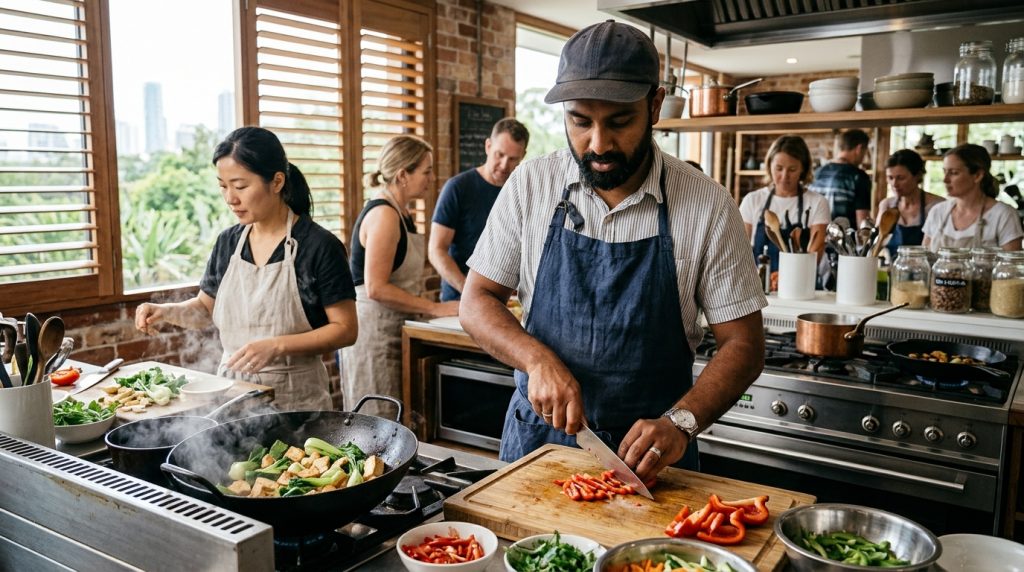
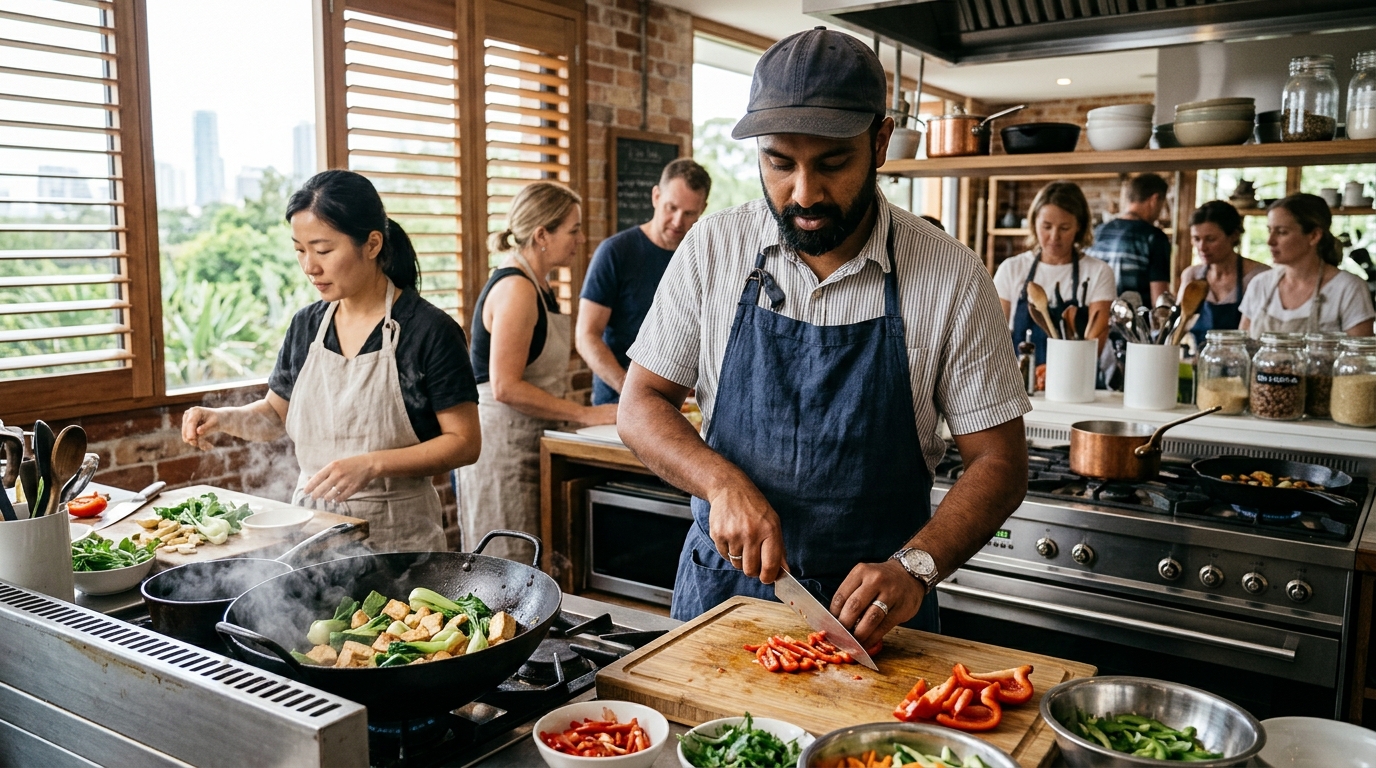
Most group classes in Brisbane follow a similar format. Participants arrive, receive an apron and a recipe pack, and work in pairs or small groups at a cooking station. An instructor demonstrates each technique before the group cooks together.
- Duration: Two to four hours is standard. Full-day workshops exist but are less common.
- Group size: Usually 8 to 20 participants, which keeps instructor attention reasonable.
- Price range: Group classes commonly fall between roughly $80 and $200 per person, depending on the venue, ingredients and whether drinks are included. Community centre workshops are often cheaper. Confirm current prices with the provider.
- Food included: Most classes end with the group sitting down to eat what they have cooked. Leftovers are sometimes packed to take home.
- Skill level: Many sessions suit beginners. Look for “intermediate” or “masterclass” labels if you want more technical content.
How to Choose the Right Class
Check whether a class is vegetarian, vegan or simply vegetarian-friendly. A menu may be meat-free yet still use dairy, eggs, fish sauce or honey, which matters for vegan cooks. Ask about stock, sauces and shared equipment if you follow a strict diet.
Book early for weekend sessions, which tend to fill first. Many providers also offer private group bookings for birthdays, team events and hen parties, and these can often be built around a fully vegetarian menu on request. Gift vouchers are widely available if you are buying for someone else.
If budget is a priority, start with community centre programs and council event listings, then compare with commercial cooking schools once you know which cuisine you want to learn.
Frequently Asked Questions
Are there vegan cooking classes in Brisbane as well?
Yes. Several Brisbane providers run vegan or plant-based sessions, and many general classes can accommodate vegan diets with advance notice. Contact the venue at the time of booking so substitutions can be planned.
Do I need cooking experience to join a class?
No. Most vegetarian classes in Brisbane are pitched at beginners and home cooks. The class description normally states the skill level, so check it before you book.
Can I book a private vegetarian cooking class for a group?
Many Brisbane cooking schools accept private group bookings and will adapt the menu to be fully vegetarian or vegan. Enquire directly with your preferred venue about minimum numbers, pricing and available dates.
Missing from this guide?
Tell us about your business and we'll check it at the next update.