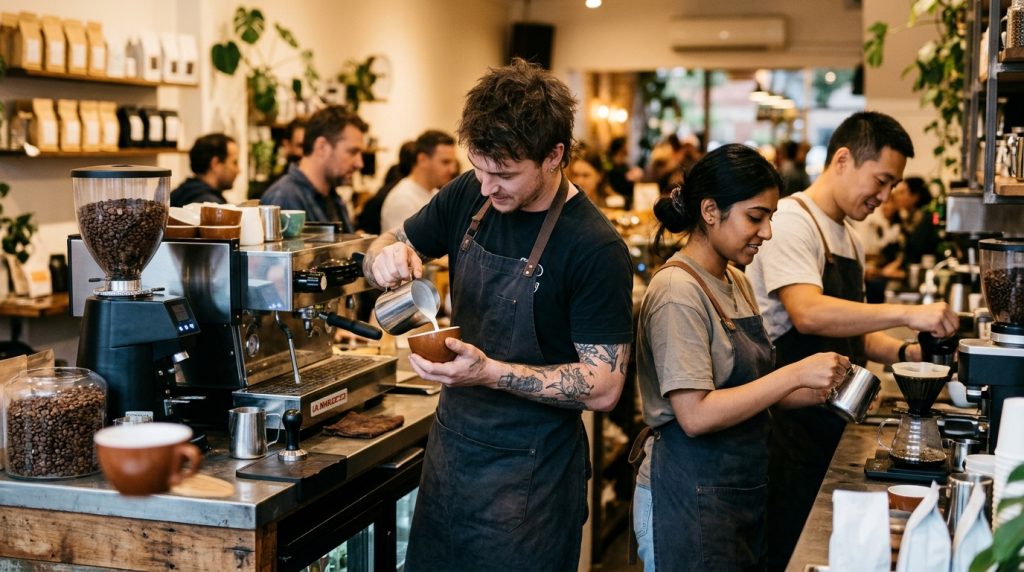
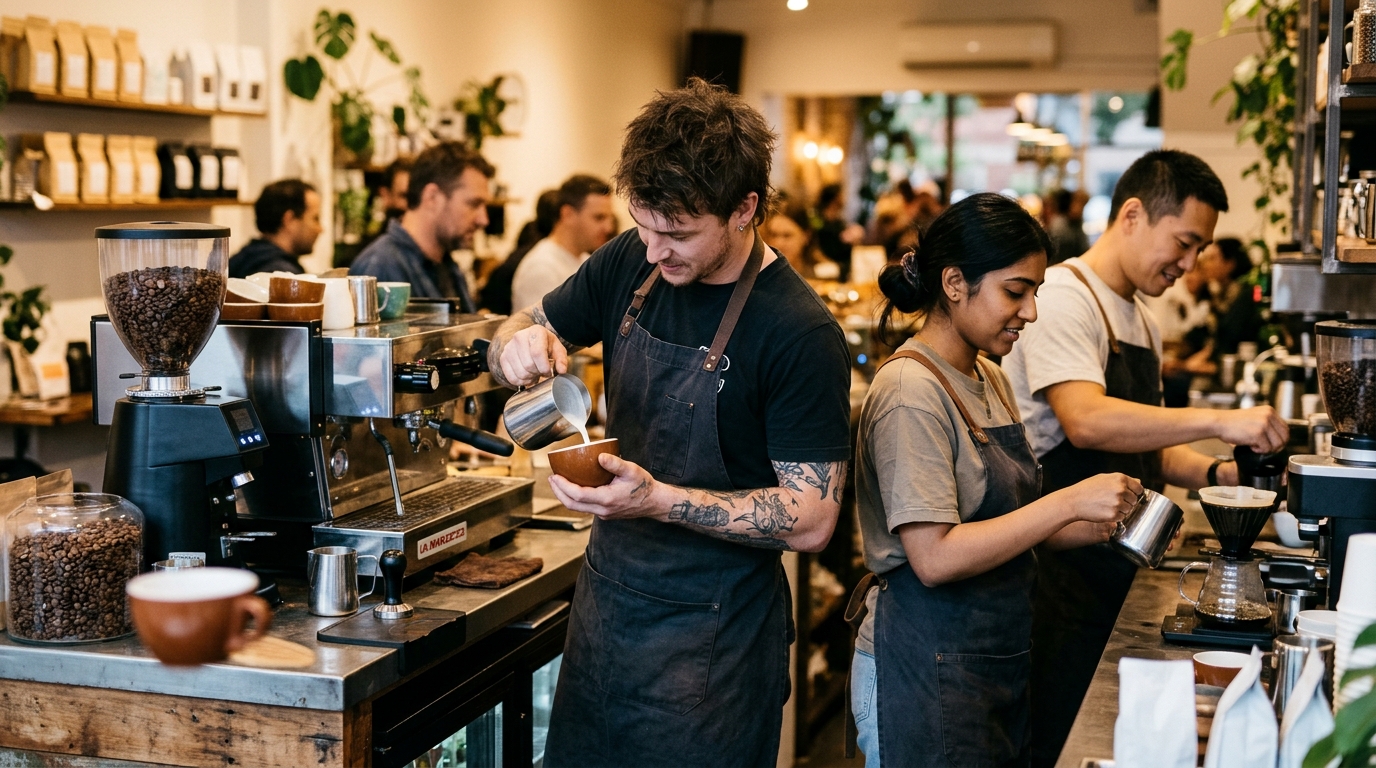
Quick price summary: Cafes in Brisbane (2026)
- Low end: $120,000 to $200,000 to open a small takeaway or kiosk-style cafe (or $4.50 to $6.00 for a coffee and $12 to $18 for a light meal as a customer)
- Mid-range: $250,000 to $450,000 to open a standard sit-down cafe (or $5.00 to $6.50 for a coffee and $18 to $26 for a breakfast or lunch dish)
- High end / enterprise: $500,000 to $900,000+ to open a large venue or multi-site operation (or $6.00 to $8.00 for specialty coffee and $26 to $38 for a premium brunch plate)
Prices in Brisbane local currency. Last updated 2026.
The cost of a cafe in Brisbane depends on which side of the counter you are on. For customers, it covers what you pay for a flat white, a breakfast plate or a catered order. For aspiring owners, it covers the full cost of leasing, fitting out, licensing and stocking a venue before the first coffee is served. This guide covers both, with figures drawn from current Brisbane trading conditions.
Costs vary widely because Brisbane cafes range from a 20 square metre takeaway window in a Fortitude Valley laneway to a 150-seat venue in a heritage building in West End. Rent per square metre, kitchen requirements, council approvals, equipment choices and staffing levels all move the total. Menu pricing follows the same pattern, shifting with suburb, sourcing and venue size.

What Do Cafes Cost in Brisbane?
For customers in 2026, a standard flat white or latte in Brisbane costs $4.80 to $6.20, with the inner-city and riverside suburbs sitting at the top of that range. A cooked breakfast averages $20 to $26, a smashed avocado or similar plate $19 to $25, and a toastie or light lunch $14 to $20. Plant-based milk typically adds $0.70 to $1.20 per drink. Specialty single-origin filter or pour-over coffee can reach $7 to $9.
For owners, the cost to open a cafe in Brisbane ranges from about $120,000 for a lean takeaway operation to $900,000 or more for a large, full-kitchen venue. Buying an existing cafe adds a goodwill component, with established businesses commonly listed between $150,000 and $500,000 depending on turnover, lease length and location. Fitout is usually the largest single cost, followed by working capital, which should cover at least three months of rent, wages and stock.
Price Breakdown by Service Level
| Service Level | What You Get | Typical Price Range | Best For |
|---|---|---|---|
| Basic (takeaway or kiosk) | Small footprint (15 to 40 sqm), espresso machine, grinder, basic fridges, limited food prep, minimal seating | $120,000 to $200,000 to open; coffee $4.50 to $5.50 as a customer | First-time owners, office-tower or laneway locations, low-overhead starts |
| Standard (sit-down cafe) | 40 to 80 seats, commercial kitchen with exhaust canopy, full coffee setup, indoor and outdoor seating, all-day menu | $250,000 to $450,000 to open; coffee $5.00 to $6.00, mains $18 to $26 as a customer | Suburban neighbourhood cafes, owner-operators with hospitality experience |
| Premium (specialty or destination) | High-end fitout, in-house roasting or specialty sourcing, chef-led menu, liquor licence, larger floor area | $500,000 to $750,000 to open; coffee $5.50 to $7.00, mains $24 to $34 as a customer | Inner-city locations, brunch destinations, experienced operators with capital backing |
| Enterprise / custom (multi-site or large format) | Multiple venues or 100+ seat flagship, central production kitchen, dedicated management and systems, catering arm | $750,000 to $1,500,000+ across sites; coffee $6.00 to $8.00, mains $26 to $38 as a customer | Established hospitality groups, franchise operators, investors scaling a brand |

What Affects the Cost of Cafes in Brisbane?
Location and Rent
Commercial rent is the biggest ongoing variable. Prime retail strips in New Farm, Paddington and the CBD can exceed $900 per square metre per year, while outer suburbs often sit between $350 and $600. Higher rent flows through to menu prices, so a cafe in Teneriffe will usually charge more per coffee than one in Chermside.
Fitout and Kitchen Requirements
A takeaway cafe with a coffee machine and sandwich bar can be fitted out for $60,000 to $120,000. A full commercial kitchen with grease trap, exhaust canopy and compliant food prep zones typically adds $80,000 to $200,000. Heritage or older buildings often need extra work to meet fire, accessibility and ventilation standards.
Council Approvals and Licensing
Brisbane City Council requires a food business licence for any cafe, with annual fees that vary by risk classification and venue size. A change of use from retail or office to cafe may trigger development approval, which can take several months and involve town planning fees of $3,000 to $15,000 or more. Serving alcohol needs a Queensland liquor licence, with application and annual fees on top. Building certification, plumbing approvals and signage permits add further costs.
Equipment Choices
A commercial espresso machine costs $8,000 to $25,000 new, with a quality grinder adding $1,500 to $4,000. Refrigeration, dishwashers, ovens and grills can push total equipment spend to $60,000 to $150,000. Second-hand and leased equipment reduces upfront cost but can raise repair risk and long-term spend.
Labour and Operating Costs
Hospitality award wages, penalty rates on weekends and public holidays, and superannuation make labour 30 to 38 percent of revenue in most Brisbane cafes. Ingredient costs typically run 28 to 35 percent. Operators who miss these benchmarks often struggle regardless of how busy the cafe looks.
How to Get Accurate Quotes
- Define your concept and size first. Settle on seat count, menu style, trading hours and whether you need a full kitchen before approaching any supplier, builder or agent.
- Check planning requirements early. Use Brisbane City Council’s planning tools to confirm whether your site needs development approval for a change of use, and speak to a town planner before signing a lease.
- Get at least three itemised fitout quotes from builders who have completed commercial food premises in Brisbane. Ask each to separate kitchen works, joinery, plumbing, electrical and compliance costs.
- Price equipment separately. Request quotes from at least two commercial equipment suppliers for new and refurbished options, and compare warranty and servicing terms.
- Build a 12-month cash flow forecast with an accountant experienced in hospitality. Include rent, wages, stock, insurance, loan repayments and a contingency of 10 to 15 percent of the total budget.
Red Flags to Watch Out For
- Fitout quotes with a single lump sum and no itemised breakdown, which makes variations and overruns hard to challenge.
- Builders without recent commercial food premises experience or who cannot show council-approved completed projects.
- Cafe sale listings that quote turnover without supplying BAS statements, profit and loss reports or POS data for at least 12 months.
- Lease terms with short tenure (under three years) combined with heavy fitout spend, leaving little time to recover the investment.
- Suppliers or agents who pressure you to sign before you have confirmed council approval for your intended use.
- Forecasts that assume full trading capacity from week one, with no ramp-up period or allowance for slow months.
Frequently Asked Questions
How much do cafes cost in Brisbane on average?
As a customer, expect to pay about $5.50 for a coffee and $20 to $24 for a main meal at a typical Brisbane cafe in 2026. As an owner, the average cost to open a standard sit-down cafe sits between $250,000 and $450,000, including fitout, equipment, licensing, initial stock and working capital. Buying an existing cafe usually costs $150,000 to $500,000 depending on turnover and lease terms.
Why are some cafes prices so much cheaper?
Lower prices usually reflect lower rent, smaller venues, simpler menus or higher volume. A takeaway cafe in an outer suburb with a short menu and low overheads can sell coffee at $4.50 profitably. Cheaper pricing can also signal lower-grade beans, fewer qualified staff or corners cut on food quality. For owners, a low-cost opening budget often means second-hand equipment, a smaller footprint or a limited kitchen, all of which affect long-term performance.
Is it worth paying more for cafes in Brisbane?
For customers, paying $1 to $2 more per coffee often gets you specialty-grade beans, skilled baristas and better ingredients, which many diners value. For owners, spending more upfront on quality fitout, reliable equipment and a strong location tends to reduce maintenance costs and improve trading over time. The right spend depends on your concept, target market and capital. Over-investing in a weak location is as risky as under-investing in a strong one.
Cafe costs in Brisbane span a wide range, from $4.50 coffees and $120,000 takeaway startups to $8.00 specialty drinks and venues costing close to $1 million to open. The right figure depends on suburb, size, menu and the standard of fitout and equipment. Whether you are choosing where to eat or planning to open your own venue, comparing itemised costs, confirming council requirements early and allowing a contingency will give a far more reliable picture than any headline number.
For a curated list of top-rated providers, see our guide: Best Cafes in Brisbane (2026).
Missing from this guide?
Tell us about your business and we'll check it at the next update.