Quick price summary: Croissant in Brisbane (2026)
- Low end: $3.50 – $5.00
- Mid-range: $5.50 – $8.00
- High end / enterprise: $8.50 – $14.00+
Prices in AUD. Last updated 2026.
Croissants in Brisbane range from a simple grab-and-go pastry at a chain café to an elaborately laminated, butter-heavy showpiece at a dedicated patisserie. The price you pay reflects a wide spectrum of quality, skill, and sourcing decisions. A croissant is one of the most technique-dependent items in baking, requiring multiple folds of dough and butter over hours or days, which means labour and ingredient quality have a direct and visible impact on what lands in your bag.
Brisbane’s café and bakery scene has grown considerably over recent years, with a noticeable increase in French-trained and European-influenced bakers setting up in inner suburbs. That expansion has pushed prices upward at the quality end while chain and supermarket options have kept budget prices relatively stable. Understanding what drives those differences helps you decide whether a $4.00 croissant or a $12.00 one is the right buy for the occasion.
What Do Croissant Cost in Brisbane?
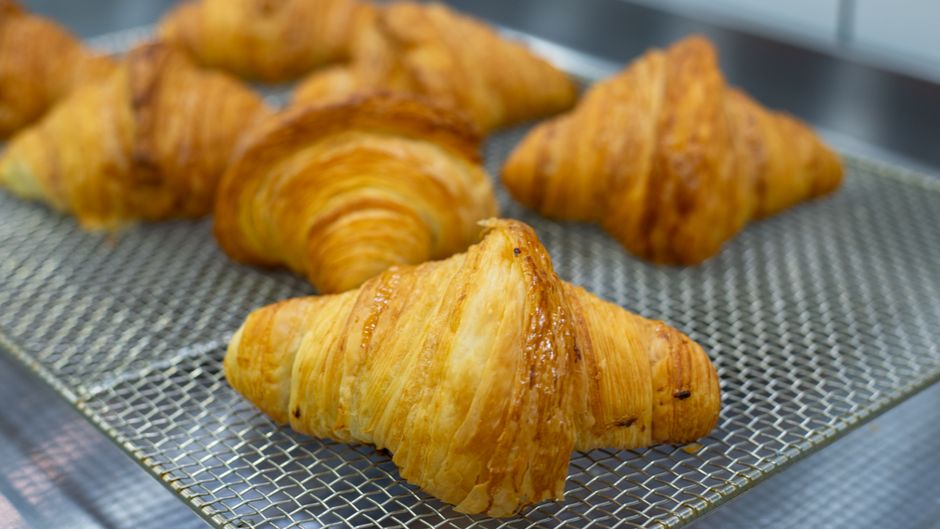
The majority of Brisbane residents buying a croissant as part of a regular café visit will pay somewhere between $5.50 and $7.50. That bracket covers a competent, fresh croissant at a well-regarded independent café in suburbs like New Farm, West End, Paddington, or Fortitude Valley. Budget options at chain cafés, service stations, and supermarket in-store bakeries typically sit between $3.50 and $5.00, though freshness and flakiness vary considerably at that price point.
At the upper end, specialist patisseries and artisan bakeries charge $8.50 to $14.00 for single croissants, particularly for filled or flavoured varieties such as almond, twice-baked, or seasonal flavoured versions. Wholesale pricing for cafés ordering in bulk from a dedicated croissant supplier generally runs $2.50 to $4.50 per unit, though that is not typically accessible to individual consumers unless ordering a dozen or more directly.
Price Breakdown by Service Level
| Service Level | What You Get | Typical Price Range (AUD) | Best For |
|---|---|---|---|
| Budget | Pre-baked or par-baked croissant from a chain café, service station, or supermarket bakery. Often softer texture, less visible lamination. | $3.50 – $5.00 | Quick breakfast on the go, cost-conscious buyers |
| Standard | Fresh croissant from an established independent café. Properly laminated, baked in-house or sourced from a quality local bakery supplier. | $5.50 – $7.50 | Everyday café visit, reliable quality |
| Premium | Artisan croissant from a specialist patisserie or dedicated bakery. High-quality European butter, extended fermentation, strong crust and honeycomb interior. | $7.50 – $10.00 | Weekend treat, gifting, quality-focused buyers |
| Specialty / Filled | Almond, twice-baked, cruffin-style, or seasonal filled croissants from top-tier patisseries. Significant additional labour and ingredients. | $10.00 – $14.00+ | Special occasions, food enthusiasts, gifting boxes |
What Affects the Cost of Croissant in Brisbane?
Butter quality and sourcing
Traditional croissants use a high-fat European-style butter (84% fat or above) for the lamination process. Australian supermarket butter sits around 80% fat, which produces a noticeably different result in terms of flakiness and flavour. Bakeries importing or sourcing premium butter pay significantly more per kilogram, and that cost flows directly into the retail price.
Labour and technique
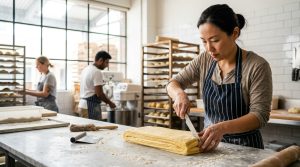
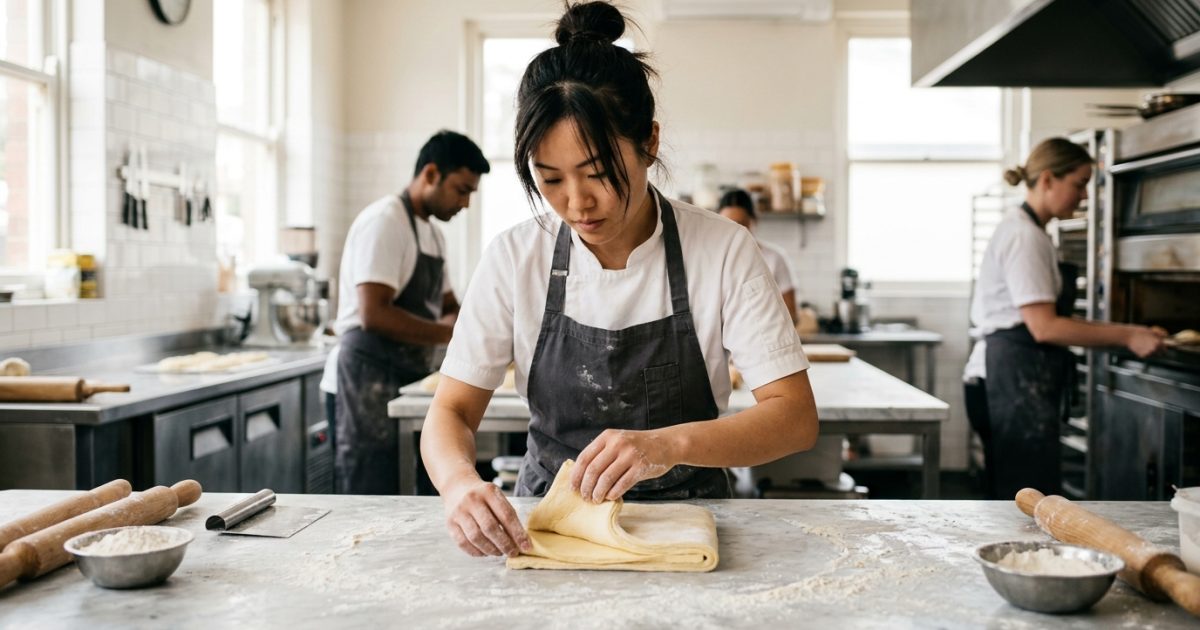
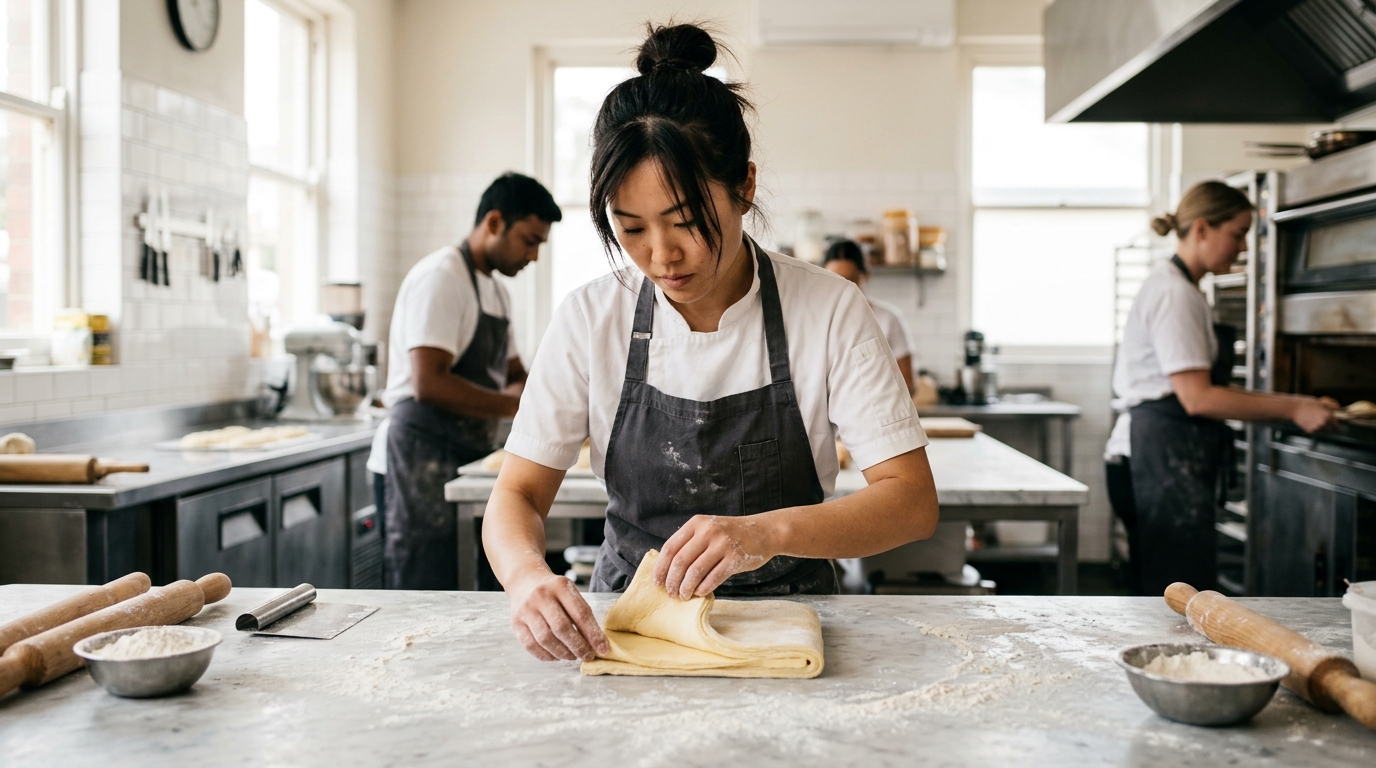
A properly laminated croissant takes between 12 and 48 hours to produce from start to finish. That process involves mixing, resting, folding in butter in multiple stages, shaping, proofing, and baking. Skilled pastry bakers command higher wages. Cafés that source croissants from an external bakery supplier absorb some of that cost, while patisseries producing entirely in-house carry the full labour overhead.
Batch size and production scale
A small-batch artisan bakery producing 50 to 150 croissants per day operates at a much higher per-unit cost than a large wholesale bakery producing thousands. That difference in scale is one of the main reasons a croissant at a boutique patisserie in Teneriffe costs twice as much as one at a chain café in a shopping centre.
Fillings and additional ingredients
Plain butter croissants are the most affordable type. Almond croissants require additional frangipane preparation and toasted almonds. Twice-baked croissants use extra butter and syrup. Savoury filled versions with ham, cheese, or specialty ingredients add both ingredient cost and assembly time. Each addition pushes the retail price up by $1.50 to $4.00 depending on complexity.
Location and overheads
A patisserie in South Brisbane or Teneriffe paying inner-city commercial rent will price accordingly. Cafés in outer suburbs or industrial areas with lower lease costs can often offer comparable quality at a slightly lower price. The suburb you are buying in can account for a $1.00 to $2.00 difference in price for a similar product.
How to Get Accurate Quotes
- Visit the bakery or café in person during the morning, as croissants are typically freshest between 7am and 11am. Assess the visible lamination, colour, and texture before purchasing.
- If you are ordering a box for an event or meeting, contact the bakery directly at least 48 hours in advance. Most Brisbane bakeries will offer a per-unit price for orders of six or more, which is often $0.50 to $1.50 less per croissant than the single-unit retail price.
- Ask whether the croissants are made in-house or sourced from a supplier. This tells you whether the price reflects the bakery’s own production costs or a retail markup on a wholesale product.
- Check whether the price includes GST. Most displayed café prices in Brisbane already include GST, but some wholesale or catering quotes may be listed excluding it.
- Compare across at least three venues before committing to a regular supplier or event order. Quality and price variation in Brisbane can be significant even within the same suburb.
Red Flags to Watch Out For
- A croissant priced below $3.50 that is described as “freshly baked” is almost always par-baked from a frozen product. The texture will be doughy rather than flaky, and the interior will lack the honeycomb structure of a properly laminated pastry.
- Croissants displayed uncovered at room temperature for extended periods lose their crispness quickly. If they appear limp or greasy in the display cabinet by 9am, they were likely baked hours earlier or overnight.
- Bakeries that cannot tell you whether their croissants are made on-site or sourced externally are being evasive. A quality producer is generally proud to confirm their process.
- Filled croissants sold without any visible or stated filling ingredient information may be using artificial flavourings or low-quality substitutes. Almond croissants, for example, should list real almond meal or whole almonds.
- Significant price drops for “end of day” croissants can be fine for value buyers, but a bakery that routinely sells the same croissant at half price by 11am may be overproducing and not managing freshness well.
- Online vendors selling croissants for next-day delivery across Brisbane without clear information about baking date, storage instructions, or ingredients warrant caution, particularly for event orders.

Frequently Asked Questions
How much do croissant cost in Brisbane on average?
The average price for a plain butter croissant at an independent café in Brisbane sits around $6.00 to $7.00 in 2026. Budget options at chains or supermarkets can be found for $3.50 to $5.00, while specialty or filled versions at artisan bakeries range from $8.50 to $14.00.
Why are some croissant prices so much cheaper?
Lower-priced croissants are typically made from par-baked frozen dough sourced from large commercial suppliers, rather than laminated from scratch on-site. The ingredient cost, labour time, and skill required are substantially lower, which allows the retail price to drop. The trade-off is usually in texture, flavour, and freshness.
Is it worth paying more for croissant in Brisbane?
For a daily coffee run, a $5.00 to $6.00 option from a solid independent café is usually sufficient. If you are buying for a special occasion, hosting guests, or simply want to experience what a well-executed croissant actually tastes like, paying $8.00 to $12.00 at a dedicated patisserie is worth the difference. The gap in quality between a mass-produced and a properly laminated croissant is easy to detect even for someone who is not a regular pastry buyer.
Brisbane’s croissant market in 2026 gives buyers genuine choice across a wide price range. Knowing what separates a $4.00 option from a $10.00 one helps you spend confidently, whether you are grabbing something quick before work or sourcing pastries for a corporate morning tea. The fundamentals to look for are consistent across price points: visible layering, a deep golden colour, and a crust that holds its shape rather than collapsing when you pick it up.