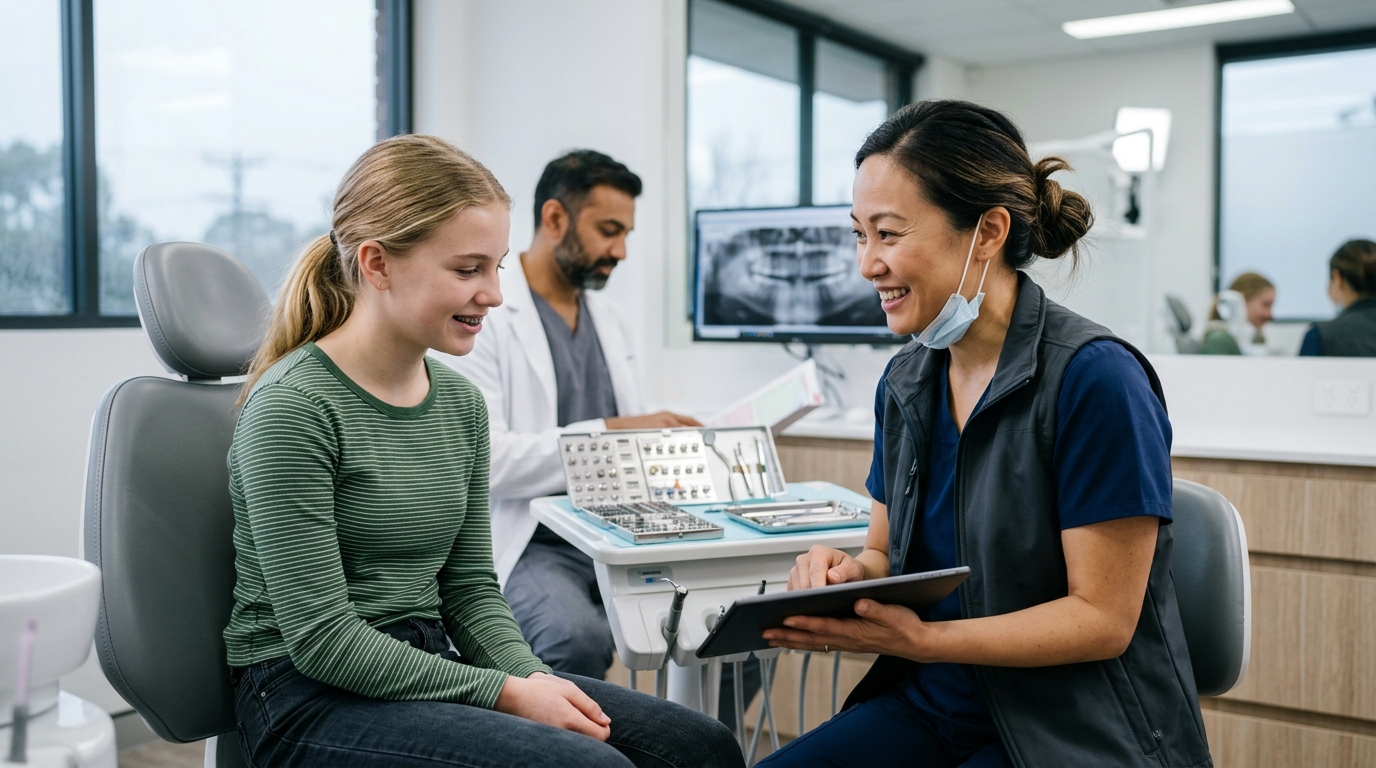
Orthodontists diagnose and treat misaligned teeth and jaws, using braces, clear aligners, retainers, and other appliances to correct bite issues and improve smile function over months or years of treatment. Choosing the wrong provider can mean poor clinical outcomes, unexpected costs, or having to restart treatment with someone else mid-way through a course that may already have taken 18 months.
What to Look for in a Orthodontist in Brisbane
Licensing and Credentials
Any orthodontist practising in Brisbane must be registered with the Dental Board of Australia and hold a recognised specialist qualification in orthodontics, which requires at least two additional years of full-time university training beyond a general dentistry degree. You can verify registration directly through the Australian Health Practitioner Regulation Agency (AHPRA) website at no cost before booking a consultation.
Insurance and Public Liability
Registered dental specialists in Australia are required to hold professional indemnity insurance, but it is worth confirming the cover is current and adequate for specialist orthodontic work. Ask the practice directly, as this protects you if something goes wrong during or after treatment.
Experience and Specialisation
A general dentist can legally provide orthodontic treatment in Australia, but a registered orthodontic specialist has completed dedicated postgraduate training in tooth movement, jaw development, and complex case management. If your case involves significant crowding, skeletal discrepancies, or jaw surgery, a specialist is the appropriate choice rather than a general practice offering clear aligners as a side service.
Reviews and Word of Mouth
Google reviews, local Facebook community groups, and word of mouth from Brisbane parents and adults who have completed treatment give you a realistic picture of wait times, communication quality, and how practices handle problems. Look for patterns across multiple reviews rather than relying on a single five-star or one-star outlier.
Transparent Quoting
A reputable orthodontist will provide a written treatment plan and full fee breakdown after an initial assessment, not a vague verbal estimate. The quote should specify what is included, the expected treatment duration, what retainers cost, and what happens if extra appointments are needed outside the agreed plan.
Warranty and Guarantees
Most orthodontic practices include a defined retention period after active treatment, during which retainer checks are covered. Confirm in writing how long post-treatment support lasts, what is included if a bracket or aligner component fails, and whether there is a fee structure for extended retention care beyond the initial period.
Questions to Ask Before Hiring
- Are you registered as a specialist orthodontist with AHPRA, or are you a general dentist providing orthodontic services?
- What does the full quoted fee include, and what common situations would result in additional charges during my treatment?
- How many active patients do you currently treat, and what is the average wait time for appointments at your Brisbane practice?
- Will I see you at every appointment, or will some visits be conducted by dental assistants or other clinicians?
- What aligner or brace systems do you use, and why are you recommending this particular approach for my case?
- What happens if I move interstate or overseas mid-treatment, and do you have a referral process for continuing care?
- Can I see before-and-after records from cases similar to mine that you have treated at this practice?
Red Flags to Watch Out For
- Red flag: A practice that cannot confirm the treating clinician’s AHPRA specialist registration in orthodontics when you ask directly.
- Red flag: A fee quote given verbally at a first visit with no written treatment plan or itemised cost breakdown to follow.
- Red flag: High-pressure tactics to sign a payment plan or start treatment on the same day as the initial consultation, before you have had time to compare options.
- Red flag: A practice that discourages you from seeking a second opinion, particularly for complex or surgical cases where significant cost and time are involved.
- Red flag: No clear process for handling emergencies such as a broken bracket or lost aligner outside of regular business hours, particularly relevant for practices in outer Brisbane suburbs with limited after-hours access.
Frequently Asked Questions
How long does it take to find a good Orthodontist in Brisbane?
Researching credentials, reading reviews, and booking initial consultations with two or three practices typically takes one to two weeks. Some specialist orthodontists in Brisbane have waiting lists for treatment commencement of several months, so starting your search early is practical if you have a target start date in mind.
What’s the average cost of a Orthodontist in Brisbane?
Full orthodontic treatment in Brisbane generally ranges from AUD $5,500 to AUD $9,500 depending on treatment type, case difficulty, and practice location. Traditional metal braces tend to sit at the lower end of that range, while ceramic braces or clear aligner systems such as Invisalign are commonly priced between AUD $7,000 and AUD $9,500. Private health insurance with major dental cover can offset a portion of this cost depending on your policy limits.
Do I need to get multiple quotes for Orthodontists in Brisbane?
Getting two or three consultations is a reasonable approach, particularly given that treatment costs can vary by AUD $2,000 or more between practices for similar cases. Multiple assessments also give you a chance to compare clinical recommendations, which is especially useful if one provider suggests a significantly different treatment approach from another.
Choosing an orthodontist in Brisbane comes down to verified specialist credentials, a written and itemised treatment plan, a clear retention and aftercare policy, and a practice whose communication style and appointment availability suit your schedule over what is often a multi-year treatment course. Take the time to check AHPRA registration, read recent patient reviews, and compare at least two formal consultations before committing. For a shortlist of vetted providers, see the Best Orthodontists in Brisbane (2026).